The short answer
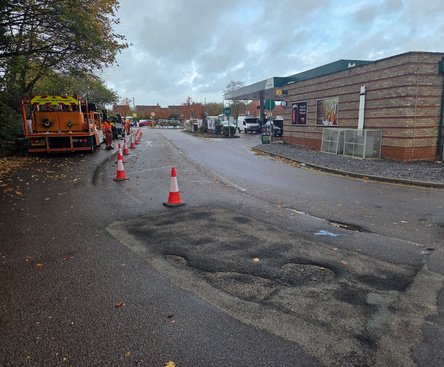
Potholes keep coming back because the original repair has not dealt with the cause of the failure. A quick temporary patch may fill the visible hole, but if water is still getting in, the repair is poorly bonded, or the surrounding surface is already weak, the pothole will usually reopen.
Key point: a pothole is often the final symptom of a wider surface failure. Repairing only the visible hole can leave the real problem untouched.
1. Water is still getting into the road surface
Water ingress is one of the biggest reasons potholes return. Once water enters cracks, joints or the edges of a repair, it weakens the surrounding material. Traffic then flexes and breaks the surface until the defect opens again.
This is why a pothole repair needs to seal the defect, not just fill it. If the edges remain open, water can continue to attack the same area.
2. The repair has not bonded properly
Temporary materials often sit inside the defect rather than forming a strong bond with the existing surface. Under traffic loading, that material can move, loosen or break away.
A long-life pothole repair should be prepared correctly, installed into a clean defect and bonded to the surrounding surface to reduce movement and edge failure.
3. The edges of the pothole are already weak
Many potholes are surrounded by cracked, fretted or oxidised material. If only the centre of the hole is filled, the weak edges can continue to break down.
This is common on access roads, car parks, bus routes, industrial estates and HGV routes where repeated loading causes the edges of the repair to fail.
4. Alligator cracking has been left too long
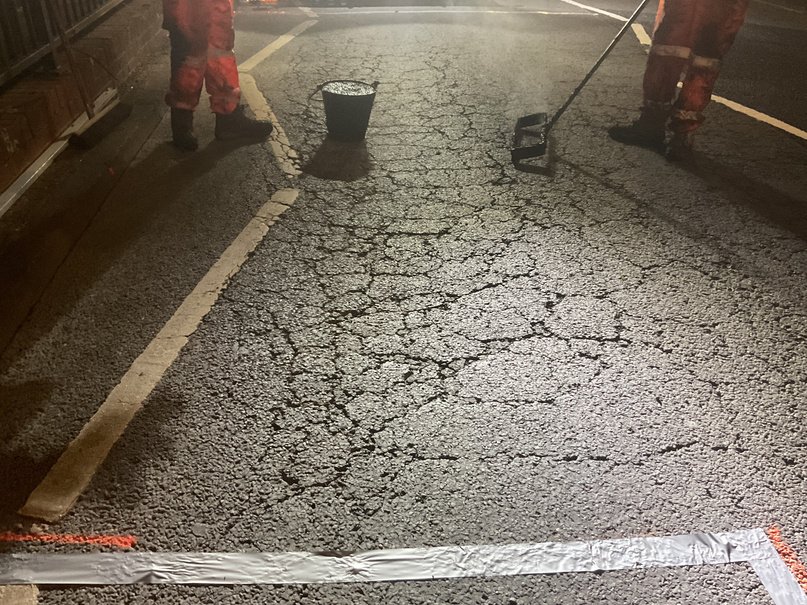
Alligator cracking, sometimes called crocodile cracking, is a warning sign that the surface is breaking down. If left untreated, the cracked area can quickly turn into an open pothole.
Early intervention can often reduce the risk of a full pothole forming. Once the surface has opened, a stronger repair method is usually needed.
5. The wrong repair method has been used
Not every defect should be treated the same way. A shallow surface crack, an open pothole, a failed reinstatement and a deep HGV-loaded defect all need different levels of repair.
This is why Platinum 3Sixty uses a treatment-led approach. The repair method should match the defect, the loading, the location and the expected service life.
6. Heavy traffic is overloading the repair
HGVs, buses, delivery vehicles and turning traffic can put significant stress on a repair. The problem is worse around junctions, wheel tracks, loading areas, freight routes and retail access roads.
In these locations, a temporary repair can fail quickly because the material is not designed for repeated high-stress loading.
7. The repair has been treated as a one-off defect
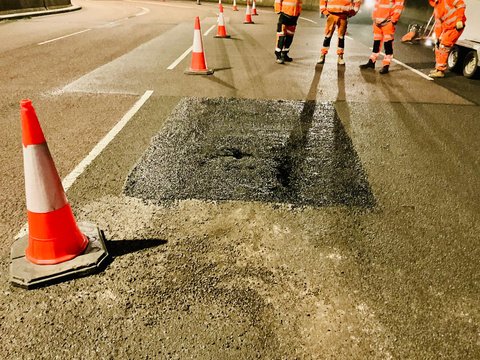
Repeated potholes often indicate a wider maintenance issue. That might include drainage problems, repeated patching, failed joints, poor previous reinstatements or a surface that needs preventative treatment.
A permanent pothole repair should look at the defect and the surrounding area, not just the hole itself.
How permanent pothole repair helps
A permanent pothole repair is designed to reduce repeat failure by dealing with the key causes:
- removing loose and failed material
- preparing the defect properly
- creating a stronger bond with the existing surface
- sealing the repair against water ingress
- using a repair system suitable for the traffic loading
- reducing the need for repeat visits and repeat traffic management
For localised potholes, failed patches, cracking and high-stress surface defects, Platinum 3Sixty often uses hot-applied Elastomac as part of a permanent repair approach.
Need help identifying the defect? Visit our pothole defect guide to compare open potholes, failed patches, alligator cracking, joint failures and HGV-loaded defects.
Where Platinum 3Sixty carries out pothole repair
Platinum 3Sixty prioritises pothole repair and permanent highway maintenance across Kent, East Kent, the M25 corridor and South East motorway corridors. We also support suitable works across Essex, Surrey, Sussex and Hertfordshire.
Pothole Repair Kent
Permanent pothole repair for highways, car parks, retail sites and commercial surfaces across Kent.
View Kent pageM25 Corridor Repairs
Rapid-response permanent repair support for strategic routes and high-traffic locations around the M25.
View M25 pageCompare Treatments
Compare pothole repair, Elastomac, asphalt, joint sealing and other surfacing options.
View treatment guideConclusion
Potholes keep coming back when the repair only treats the visible hole. To reduce repeat failures, the repair needs to deal with water ingress, poor bonding, weak edges, loading conditions and surrounding surface breakdown.
A permanent repair approach helps reduce repeat call-outs, repeated traffic management, disruption and whole-life cost.